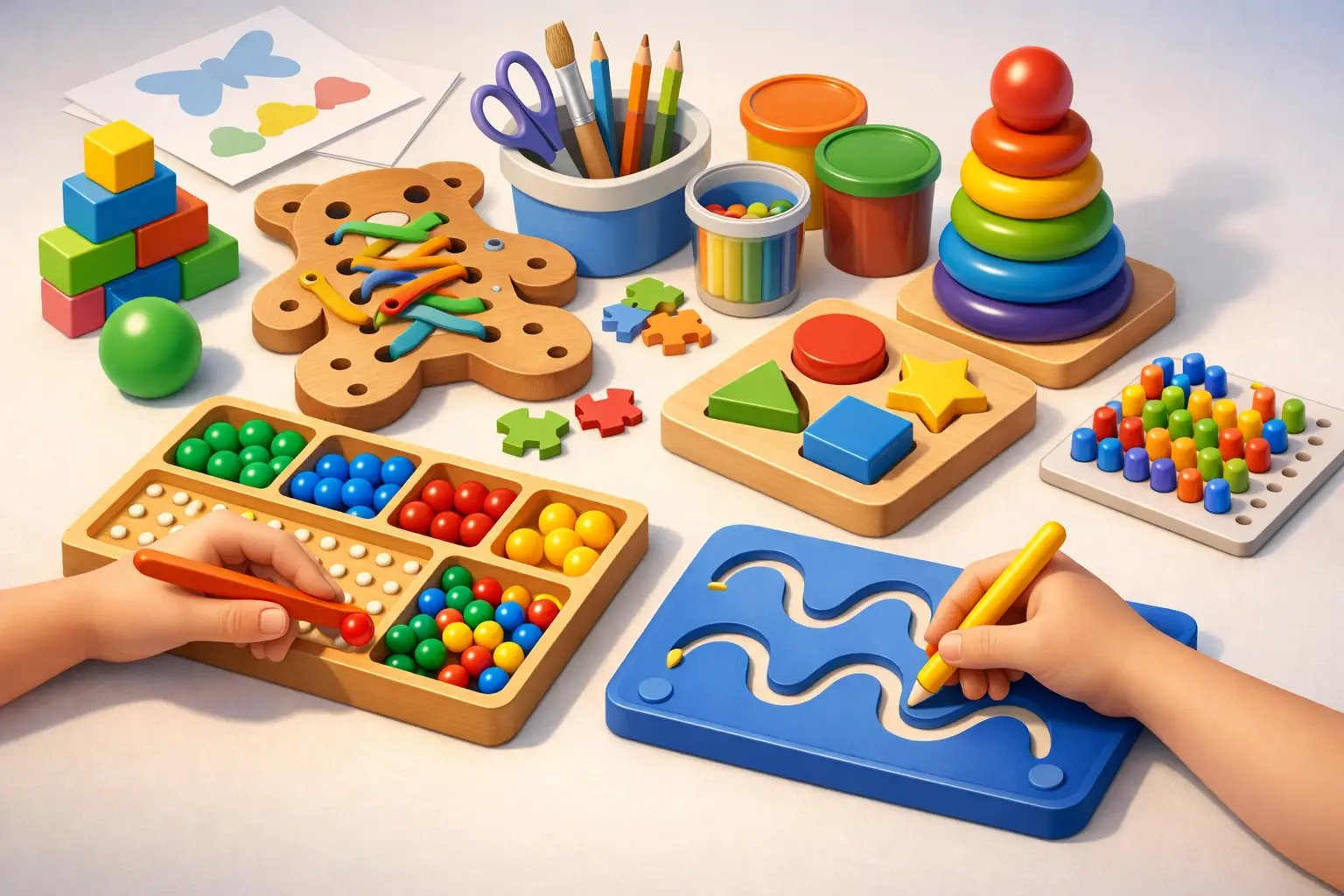
Fine Motor Skills Preschool Activities That Matter

A child carefully placing a button into a small container may look like they are simply enjoying a quiet game. In fact, these small moments are building the control, strength, and confidence behind fine motor skills preschool development. From holding a crayon to turning a page, little hands are working hard every day.

For preschool children, fine motor development is not about producing perfect writing or crafts. It is about having many happy, age-appropriate chances to use their fingers, hands, and wrists with purpose. With patient encouragement and playful practice, children develop skills that support independence now and learning later.

What are fine motor skills?

Fine motor skills are the small, controlled movements children make with their hands and fingers. These movements work alongside hand-eye coordination, visual attention, and growing concentration. A child uses fine motor skills when they pick up a small piece of food, stack blocks, open a lunch container, fit puzzle pieces together, or make marks on paper.

These skills begin developing in infancy and continue to grow quickly throughout the preschool years. A younger child may enjoy squeezing soft dough or grasping a chunky crayon. An older preschooler may begin using scissors, tracing simple lines, fastening a button, or building a more detailed block structure.

Every child develops at their own pace. Some children are eager to draw for long periods, while others would rather build, scoop, or explore sensory materials. The goal is not to compare children. It is to provide gentle opportunities that match their current abilities and make them feel capable.

Why fine motor skills matter in preschool

Strong fine motor skills help children take part more comfortably in daily routines. They support self-care tasks such as feeding themselves with utensils, washing hands, pulling up a zipper, and putting toys away. These everyday successes can make a child feel more independent and secure.

They also prepare children for early learning. Before children can write letters, they need to develop hand strength, wrist stability, finger control, and the ability to coordinate what they see with what their hands do. Coloring, painting, threading, and manipulating small objects all help create this foundation.

Just as importantly, hands-on activities can build patience and problem-solving. When a child tries to complete a puzzle, connects pieces in a construction set, or carefully transfers objects from one bowl to another, they are learning to focus, adjust, and try again. Those are valuable school-readiness skills, even when the activity feels like pure play.

Fine motor skills preschool activities children enjoy

The most effective activities are usually simple, inviting, and repeated often. Children do not need a crowded table of specialized materials. They need safe tools, an interested adult, and enough time to explore without being rushed.

Building and connecting

Blocks, large interlocking bricks, stacking cups, and simple construction toys invite children to grasp, release, press, twist, and balance. Building is especially helpful because it naturally encourages children to return to the activity again and again. A tower falls down, and they have a reason to try a new approach.

For younger preschoolers, larger pieces are easier to hold and safer to explore. As coordination grows, smaller pieces and more detailed designs can offer an appropriate challenge. Adult supervision remains essential whenever materials include small parts.

Creating with crayons, paint, and dough

Art experiences give children a meaningful reason to use their hands. Scribbling with crayons, making lines in sand, painting with brushes, peeling stickers, and rolling dough all develop different movements. There is no need to correct a child’s picture or insist that a circle looks a certain way. The process matters more than the final product.

Play dough is particularly useful because squeezing, pinching, rolling, and flattening build hand strength. Children can make pretend food, press in safe tools, or hide and find larger objects in the dough. If a child does not enjoy getting messy, offer a paintbrush with water on a wall or pavement, or try dry materials such as chunky crayons and stickers.

Sorting, scooping, and transferring

Practical play often becomes a favorite because children enjoy feeling helpful. Transferring pom-poms with tongs, scooping dry pasta between containers, sorting large buttons by color, or placing clothespins around a container can develop control and coordination.

Choose materials carefully for the child’s age and supervise closely. For children who still mouth objects, larger, non-choking materials are the better choice. A simple activity can be adjusted easily: begin with hands, then introduce a spoon, and later offer tongs when the child is ready.

Puzzles, books, and everyday routines

A well-chosen puzzle encourages children to turn pieces, notice shapes, and persist through small challenges. Board books also offer valuable hand practice as children lift flaps, point to pictures, and turn pages. These quieter activities can be especially welcome after more active play.

Daily routines deserve attention too. Letting a child attempt to open a container, pull off a sock, wipe a small spill, or help put toys into a basket supports fine motor development in a real and useful way. It may take longer than doing the task for them, but those extra moments communicate a powerful message: “You can try.”

How adults can support progress without pressure

Children learn best when adults notice effort, not just results. Instead of saying, “That is not how you hold the crayon,” try, “You are making lots of marks,” or “You kept trying to fit that piece.” Warm, specific encouragement helps children stay engaged when a task feels difficult.

It also helps to set up the environment for success. Offer a child-sized table and chair so their feet and body feel stable. Keep a few materials within reach rather than presenting too many choices at once. Rotate activities so familiar favorites remain available while new challenges appear gradually.

Short bursts of practice are enough. A preschooler may spend five focused minutes threading, drawing, or building, then move on to active play. That is normal. Fine motor growth comes through regular experiences over time, not long sessions or worksheets.

At CESK Pre-school, play-based activities are planned with each age group in mind, so children can explore materials that suit their stage of development while feeling safe, supported, and proud of what they can do.

When a child needs extra support

Children’s development varies, and one difficult activity does not usually signal a concern. A child may avoid scissors because they have had little experience with them, dislike sticky textures, or simply prefer energetic outdoor play. Offering a different activity and trying again later is often all that is needed.

However, speak with your child’s pediatrician or early childhood educator if you consistently notice frustration with everyday hand tasks, difficulty using both hands together, an unusually weak grip, or a loss of skills the child previously had. Early guidance can bring reassurance and, when needed, practical support tailored to your child.

The kindest approach is to follow your child’s interest. Put out the blocks, offer the dough, invite them to help with a small task, and celebrate the careful work of their growing hands. Those little fingers are not just preparing for preschool activities – they are discovering, day by day, “I can do it.”

Add your thoughts

Your email address will not be published. Required fields are marked *