
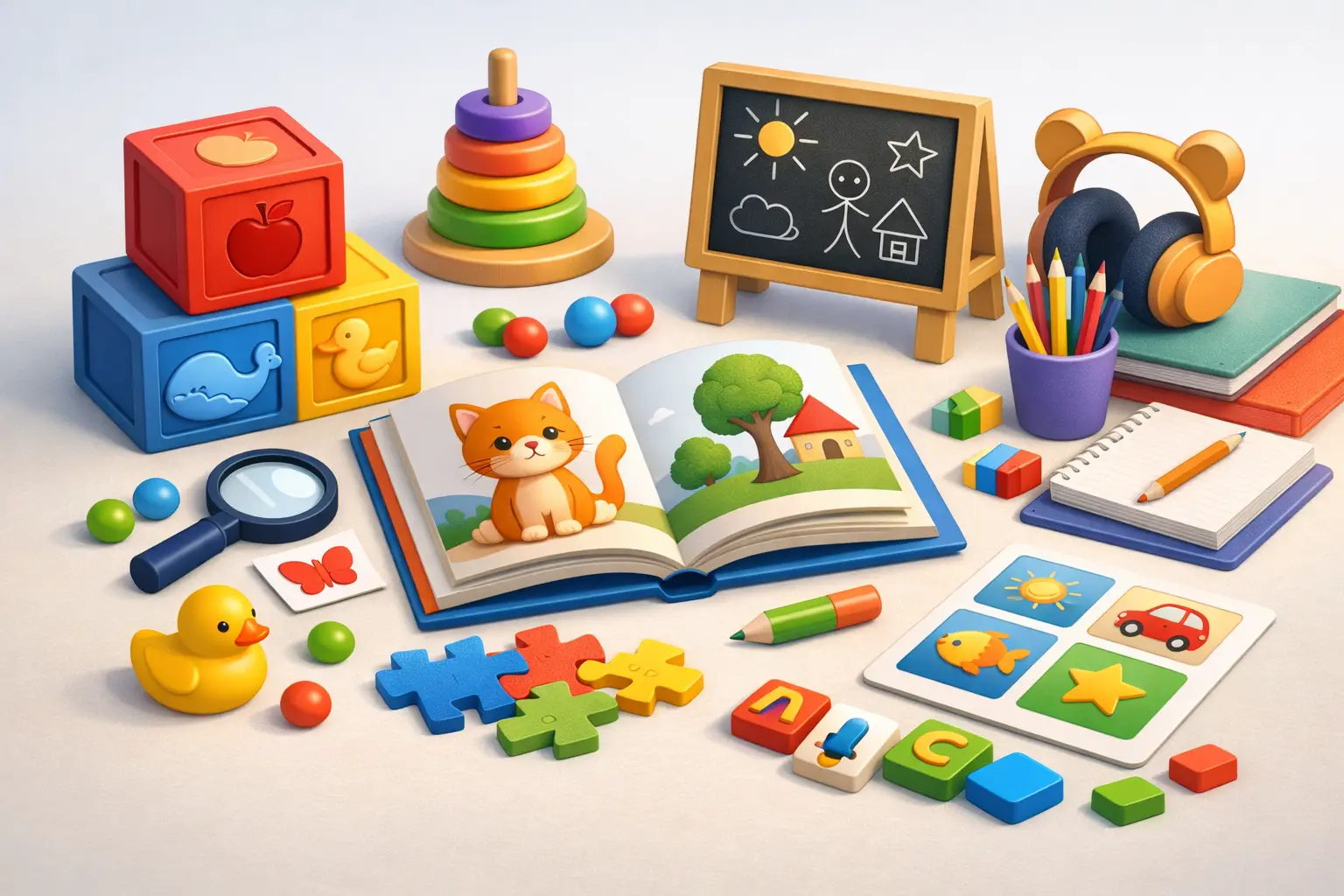
A preschooler who asks for the same bedtime story again is doing more than enjoying a familiar book. They are learning that words carry meaning, stories have a sequence, and their own thoughts are worth sharing. The best early literacy activities preschoolers experience often look wonderfully simple: talking, singing, drawing, pretending, and reading together.
For young children, early literacy is not a race to memorize the alphabet or write perfect letters. It is the steady development of listening, speaking, vocabulary, print awareness, and a love of books. When these skills grow through warm, playful interactions, children gain confidence alongside school-readiness skills.
What Early Literacy Looks Like Before Reading
A child does not need to read independently to be becoming literate. Preschoolers build the foundations for reading every time they notice a logo, recognize their name, repeat a favorite rhyme, or explain what happened in a picture.
Language comes first. Children need many chances to hear new words, use them in conversation, and see adults respond thoughtfully to what they say. A child who points to a truck and says, “Big truck,” can be gently supported with, “Yes, that is a large delivery truck. Where do you think it is going?” This adds vocabulary without turning a natural moment into a test.
Books also help children understand how print works. They begin to see that we hold a book a certain way, turn pages in order, and use pictures and words to tell a story. Some preschoolers become interested in letters early, while others spend longer enjoying songs, conversation, and storytelling. Both paths can support healthy development.
The goal is not pressure. It is helping children associate language and books with closeness, curiosity, and success.
Early Literacy Activities Preschoolers Can Enjoy Every Day
The most useful activities are easy to repeat. A few calm minutes every day are usually more valuable than an occasional long lesson, especially for children with busy routines or short attention spans.
Read aloud and pause for conversation
Choose books with clear pictures, repeating phrases, funny details, or familiar daily experiences. As you read, pause briefly to invite your child into the story. You might ask, “What do you notice on this page?” or “What do you think will happen next?”
There is no need to ask a question on every page. Some children prefer to listen quietly, while others want to tell a whole story of their own. Follow their lead. If they ask for the same book many times, that repetition is valuable. Familiar stories let children join in with words, predict events, and feel capable.
Try to make reading part of a predictable routine, such as after bath time, before a nap, or during a quiet break after preschool. A cozy place, an adult’s full attention, and a small stack of books can matter more than having a large home library.
Make their name meaningful
A child’s own name is often the first word they want to recognize. Write it on artwork, a water bottle label, or a small card near their belongings. Point it out naturally: “This says Maya. It is your name.”
Invite your child to decorate the letters with stickers, trace over them with a finger, or try writing the first letter using crayons. Keep the experience light. Preschool writing may look like lines, circles, or marks at first, and these are meaningful early steps toward control and communication.
Avoid correcting every attempt. Saying, “You worked hard to make marks for your name,” protects motivation and encourages children to keep trying.
Play with sounds, not drills
Before children can connect letters to sounds, they benefit from hearing the smaller sounds within words. Rhymes and silly sound games make this skill feel like play.
At snack time, you could say, “Banana and bandana sound a little alike. Can you hear the b sound at the beginning?” During a car ride, try finding words that rhyme with cat, even if the answers become delightfully silly. Clapping the beats in names, such as “Sa-mi-ra” or “Ah-med,” also helps children notice the rhythm of language.
Keep the game short and cheerful. If your child loses interest, move on. At this age, enjoyment is part of the learning.
Turn everyday moments into stories
Preschoolers have plenty to say when adults give them time. After a trip to the park, ask your child to tell you what happened first, next, and last. You can gently model a fuller sentence: “First, you went down the slide. Then you found a tiny leaf.”
Pretend play is especially rich for literacy. When children run a restaurant, care for dolls, build a garage, or set up a doctor’s office, they practice new words, take turns speaking, and create narratives. Add simple props such as notepads, menus, empty containers, toy phones, or paper tickets. Children may scribble an order or make a sign, discovering that writing has a purpose.
Create a welcoming mark-making space
Keep crayons, thick pencils, washable markers, paper, and a small clipboard within reach. Children are more likely to draw and write when materials are available without a big setup.
Invite them to make a birthday card, draw a picture of the family, or “write” a shopping list. Ask them to tell you about their picture, then write down their words underneath if they would like. This shows that spoken ideas can become written words.
Fine-motor development supports writing too. Playdough, threading large beads, using child-safe scissors, and picking up small objects with tongs all strengthen the hands and fingers. These activities do not teach literacy by themselves, but they make later writing tasks more comfortable.
Sing, chant, and repeat
Songs and nursery rhymes help children hear patterns in language while building memory and attention. Choose songs with actions, pauses, and repeated lines so your child can join in even before they know every word.
Slow down when singing familiar songs and leave out a final word for your child to fill in. For example, “The wheels on the bus go round and…” Let them supply “round.” These small moments teach children to listen closely and anticipate language without feeling like formal instruction.
Match the Activity to Your Child
A two-year-old may enjoy pointing to pictures, copying animal sounds, and turning pages. A three-year-old may begin to retell a favorite story, recognize some letters, or make marks with a clear purpose. By four, many children are ready for longer conversations, more detailed pretend play, and growing interest in the sounds and letters in their name.
These are broad patterns, not deadlines. Some children are naturally talkative but less interested in drawing. Others may spend a long time carefully looking at pictures before speaking. Children who are learning more than one language may use different words in different settings. Continue speaking, reading, and singing in the language that feels most natural and meaningful at home. A strong foundation in any family language supports communication and learning.
If a child has difficulty hearing, speaking, understanding simple directions, or showing interest in interaction over time, it can be helpful to share observations with their pediatrician or early childhood educator. Seeking guidance is a caring step, not a label.
What a Supportive Preschool Environment Adds
At home, children benefit from familiar voices and routines. In preschool, they also gain daily opportunities to communicate with peers, listen in a group, and use language during play. A thoughtfully planned early-years setting should make books easy to reach, include songs and stories in the daily rhythm, and provide materials for drawing, building, and imaginative play.
Just as importantly, educators should notice each child. A caring teacher may extend a child’s interest in vehicles with a transportation book, help them find words when they are frustrated, or invite them to describe a block structure to a friend. These responsive exchanges are where language grows.
At CESK Pre-school, play-based experiences are designed around children’s developmental stages, helping them build communication, confidence, fine-motor skills, and early literacy in a safe, nurturing setting. For parents, regular communication with educators can make it easier to carry a child’s interests from the classroom into family life.
You do not need to create a classroom at home or turn every conversation into a lesson. Read one more page, listen to one more story, and let your child see that their words matter. Those small, repeated moments give literacy a happy beginning.